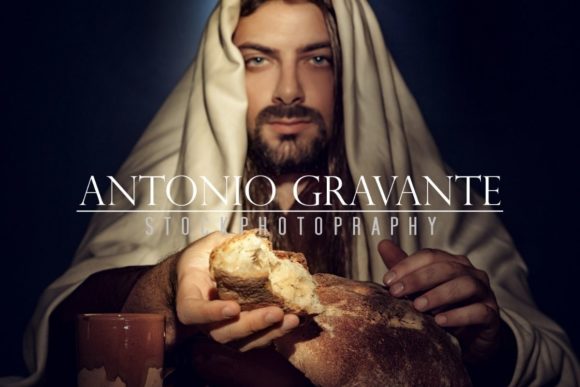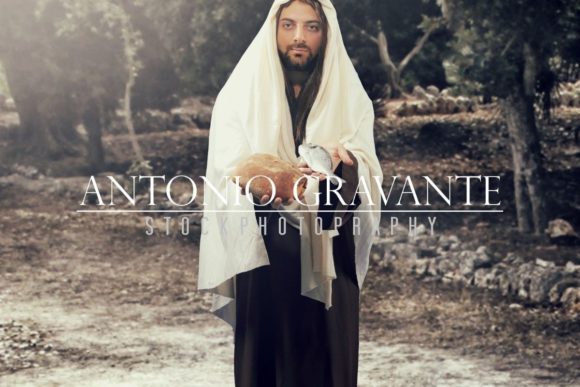
Multiplication of the Loaves and Fish
Few stories feel as familiar—and as puzzling—as the Multiplication of the Loaves and Fish. A small crowd, a meager lunch, and suddenly thousands are fed with baskets left over. It is a tale told in all four Gospel accounts, which suggests something about its significance. But beyond the miracle itself, the story carries layers of practical meaning that speak directly to modern life. It is not merely about ancient events. It is about how small resources, when shared and blessed, can meet far greater needs than anyone expects.
What the Multiplication of the Loaves and Fish Really Means
At its simplest, the Multiplication of the Loaves and Fish recounts how Jesus fed a crowd of about five thousand men, plus women and children, with five barley loaves and two fish. The young boy who offered his lunch became part of something far larger than himself. The story appears in John 6, Matthew 14, Mark 6, and Luke 9, with slight variations in detail but a consistent core: scarcity becomes abundance through gratitude and generosity.
The term Multiplication of the Loaves and Fish has come to symbolize resourcefulness, community sharing, and the surprising results that follow when people offer what little they have. It is a narrative about trust, logistics, and the power of organized generosity—elements that remain deeply relevant today.
The Main Purpose of the Story
The primary purpose of the Multiplication of the Loaves and Fish is to demonstrate that human limitations do not set the final boundary. The disciples saw a problem: too many people, too little food, and not enough money to buy more. Jesus saw an opportunity to teach something deeper. The story invites readers to shift from a scarcity mindset to a perspective of sufficiency. It does not promise that everyone will get everything they want, but it suggests that genuine needs can be met when people participate in the process together.
This is not about magic. It is about transformation—of perspective, of community, and of the way we relate to what we already possess.
Why the Multiplication of the Loaves and Fish Still Resonates Today
Adults across many walks of life—entrepreneurs, educators, freelancers, parents, and professionals—find themselves in situations that feel like the crowd on that hillside. There is a project to complete with limited time. A team to feed with a minimal budget. A classroom of students who need more than the available resources can provide. The gap between what is at hand and what is needed can feel discouraging.
The Multiplication of the Loaves and Fish speaks directly to that gap. It offers a narrative where the gap closes not through a sudden windfall, but through intentional action, shared risk, and a willingness to start with what is already available. This is why the story appeals to people who are practical, resourceful, and curious about how small beginnings lead to larger outcomes.
What Problems and Goals It Supports
- Resource scarcity: When budgets, materials, or energy are limited, the story offers a framework for making the most of what you have.
- Community building: It models how collective action multiplies individual contributions.
- Leadership challenges: Leaders often face the tension between what is needed and what is possible. This story reframes that tension.
- Creative blocks: Creators and entrepreneurs who feel stuck with limited tools can find encouragement in seeing small inputs produce significant results.
- Personal growth: The shift from fear to trust, from hoarding to sharing, is a universal human challenge.
Where and How the Multiplication of the Loaves and Fish Can Be Applied
The story may be ancient, but its principles transfer naturally into modern settings. The key is to view it not as a religious relic, but as a model for how to approach constraints creatively and generously.
In Personal and Family Life
A parent juggling a tight household budget might feel there is never enough to go around. Applying the spirit of the Multiplication of the Loaves and Fish means starting with an honest inventory of what is actually available—time, skills, food, space—and then looking for ways to combine those resources with others. Shared meals, skill swaps, and cooperative childcare all echo the same pattern: individual small offerings add up to something that sustains everyone.
In Professional and Entrepreneurial Contexts
Small business owners and freelancers often operate with lean resources. A solo consultant with a limited client base might feel unable to compete with larger firms. But the principle of multiplication suggests focusing not on what is missing, but on what can be offered authentically. One well-crafted service, one thoughtful piece of content, or one generous referral can ripple outward in unexpected ways. The Multiplication of the Loaves and Fish here becomes a metaphor for strategic patience and consistent small investments.
In Education and Community Work
Teachers and community organizers regularly face the reality of insufficient materials, space, or funding. The story encourages them to invite participation rather than trying to solve everything alone. When students bring their own perspectives, families contribute skills, and local businesses donate small items, the collective result often exceeds what any single budget could have purchased. The logistics matter—organizing, blessing, distributing—just as they did in the original account.
In Digital and Creative Projects
Bloggers, content creators, and marketers may feel pressure to produce large volumes of high-end content with minimal resources. The Multiplication of the Loaves and Fish suggests that a small piece of genuinely helpful content, shared with intention, can reach far more people than scattered efforts. One well-written article, one generous free resource, or one thoughtful social media post can be the loaves and fish that feed a growing audience over time.
Practical Observations from the Story
What makes the Multiplication of the Loaves and Fish so compelling is not the miracle itself, but the human details that surround it. Consider a few observations that are often overlooked:
- The boy offered his lunch without knowing the outcome. He did not wait until he was certain it would work. He simply made what he had available. In practical terms, this means you do not need a guarantee before you contribute.
- Jesus organized the crowd into groups. The distribution was not chaotic. The story notes that the people sat down in companies of fifties and hundreds. Order made multiplication possible. For anyone managing a project, this is a reminder that structure enables abundance.
- There were leftovers. The abundance was not just enough; it was more than enough. Twelve baskets were collected afterward. This suggests that when resources are shared generously and wisely, the surplus can bless others beyond the immediate need.
- The disciples had to participate. Jesus did not produce food directly from nothing. He took what was given, blessed it, and gave it back to the disciples to distribute. They became part of the process. Multiplication requires participation.
Important Considerations Before Applying This Story
While the Multiplication of the Loaves and Fish is inspiring, it is not a formula that guarantees material increase in every situation. It is important to approach it with nuance and honesty.
Context Matters
The story is rooted in a specific cultural and spiritual context. Using it purely as a productivity hack misses its deeper invitation to trust, generosity, and community. The multiplication was not just about food; it was about revealing a way of relating to God and to others. In modern applications, keep the heart of the story intact, not just the mechanics.
Not a Substitute for Planning
The story does not dismiss practical planning. Jesus asked what resources were available, consulted with his disciples, and organized the crowd. Multiplication worked because preparation and faith worked together. Blindly hoping that small inputs will always produce large outputs without strategy or effort is a misunderstanding.
Scale and Realism
Not every small beginning leads to a massive outcome. Sometimes the multiplication is small and quiet. That is okay. The value is in the process of learning to trust, share, and participate, not in measuring success by the size of the result. For entrepreneurs and creators, this is a healthy reminder to focus on faithful action rather than obsessive scaling.
Communal vs. Individual
The Multiplication of the Loaves and Fish is a communal story. It does not work well as a purely individualistic model. One person alone with five loaves will only have five loaves. The multiplication happened because the boy offered his food, Jesus blessed it, the disciples distributed it, and the crowd received it together. If you apply this to your life, look for ways to involve others rather than trying to do everything alone.
Practical Ways to Start Applying the Principles Today
If the Multiplication of the Loaves and Fish has sparked something in you, here are simple, concrete steps that align with its spirit:
- Take inventory of what you already have. Write down your current resources—time, skills, relationships, materials, ideas. Do not focus on what is missing. Focus on what is present.
- Share what you have with one other person. Multiplication begins with a single act of generosity. Offer a skill, a meal, a piece of advice, or a small gift without expecting immediate return.
- Ask for help. The disciples asked the crowd what was available. You do not have to solve everything alone. Invite others to contribute their own small offerings.
- Create structure around your resources. Organize your time, your team, or your budget so that what you have can be distributed effectively. Even small things benefit from clear systems.
- Bless what you have before using it. This does not need to be religious. Pausing to appreciate and intentionally dedicate your resources changes your mindset from scarcity to gratitude. That shift alone can open up new possibilities.
- Expect leftovers. Plan for abundance. When you share generously, there is often more left over than you anticipated. Use that surplus to bless others in turn.
A Final Perspective on the Multiplication of the Loaves and Fish
The Multiplication of the Loaves and Fish is one of those rare stories that works on multiple levels. It can be read as a historical account, a spiritual teaching, a leadership lesson, or a practical guide to resourcefulness. Its enduring appeal lies in its honesty about human limitations and its hopeful vision of what happens when those limitations are brought into a larger story.
Whether you approach it from a faith perspective or simply as a narrative about human potential, the story invites you to reconsider what you think is possible with what you have right now. The crowd on that hillside did not expect to be fed. The disciples did not expect the boy's lunch to matter. The boy himself probably did not expect his small offering to become the center of a story told for two thousand years.
That is the quiet power of the Multiplication of the Loaves and Fish. It reminds us that small, shared, blessed resources can go further than we ever imagined—and that we are all invited to bring something to the table.