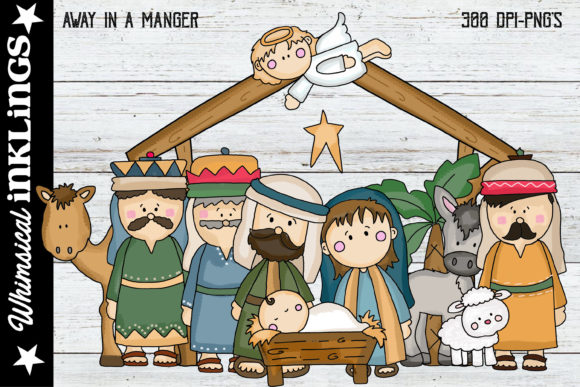
Away in a Manger
You have likely heard Away in a Manger dozens of times, drifting from speakers in shopping centres, sung by children in school nativity plays, or hummed softly during candlelit services. It is one of the most recognised Christmas carols in the English-speaking world, yet its quiet simplicity often causes it to be overlooked as merely a sweet children's song. In reality, this carol carries a surprising depth of history, structure, and practical utility that extends far beyond December 25th. Understanding what makes Away in a Manger work — both as a piece of music and as a cultural artefact — can inform how you use it in education, content creation, branding, and even professional communication.
What Away in a Manger Actually Is
At its core, Away in a Manger is a hymn that recounts the nativity scene from the Gospel of Luke, focusing on the infant Jesus lying in a feeding trough because there was no room in the inn. The text is gentle, image-driven, and emotionally restrained. Unlike many carols that announce or celebrate, this one observes and rests. The original poem, first published in the United States in the 1880s, was long attributed to Martin Luther, though scholars now agree that is almost certainly apocryphal. The two most common musical settings — one by William J. Kirkpatrick and another by James R. Murray — differ in melody but share a lullaby-like quality that gives the piece its enduring appeal.
What makes Away in a Manger distinct from other Christmas hymns is its deliberate lack of theological complexity. It does not argue, explain, or exhort. It simply places you in a stable and invites you to look. That tonal restraint is its greatest strength, and it is precisely what makes the carol useful in contexts where you need to evoke warmth, safety, or reflection without being prescriptive.
Key Characteristics and Notable Qualities
If you examine the carol closely, several structural features stand out. The first is its brevity. Most versions contain only three stanzas, and each stanza is just four lines long. This economy of language means the carol can be learned quickly, remembered easily, and performed by almost anyone regardless of musical training. For professionals working in education or community engagement, that low barrier to entry is invaluable.
Second, the vocabulary is concrete and sensory. Words like manger, hay, cattle, starry sky, and sleep create a vivid scene without abstractions. This sensory grounding makes Away in a Manger exceptionally effective for early childhood learning, relaxation exercises, and even guided meditation. The carol does not ask you to believe anything specific; it asks you to picture something specific.
Third, the melody — particularly in Kirkpatrick's setting — uses a narrow vocal range and stepwise motion. That makes it singable by people with no formal training, which is why it appears in everything from preschool programs to corporate holiday gatherings. The tune itself functions as a mnemonic device, embedding the text into memory with almost no effort.
Why These Qualities Matter in Real Applications
When you strip away the religious context, Away in a Manger becomes a study in effective communication: short, image-rich, emotionally resonant, and accessible. These are the same qualities that make good product copy, strong storytelling, and clear instructional design. If you are a blogger or content creator, the carol demonstrates how to convey a complete emotional arc in under a hundred words. If you are an educator, it shows how repetition, rhyme, and rhythm support retention. If you are a marketer, it illustrates the power of understatement — you do not need to shout to be remembered.
Practical Applications Across Environments
The usefulness of Away in a Manger extends well beyond the pew or the living room. Here are several concrete ways people have adapted and applied the carol, along with observations on what works and what does not.
Personal and Family Settings
Many parents use Away in a Manger as a lullaby year-round, not just during Advent. The slow tempo, gentle intervals, and soothing imagery make it effective for calming young children at bedtime. This is not sentimental nostalgia; it is functional. The carol's rhythm mirrors a resting heart rate, which can help regulate breathing in both the singer and the listener. For adults managing stress or anxiety, singing or listening to the carol can serve as a brief mindfulness anchor. The act of focusing on the stable scene — the quiet, the animals, the sleeping child — redirects attention away from rumination and toward a simple, peaceful mental image.
Educational and Classroom Use
In early childhood education, Away in a Manger is a staple because it supports multiple learning objectives simultaneously. Teachers use it to teach rhyme and rhythm, introduce vocabulary related to farms and families, and encourage emotional expression through music. The carol also works well in multicultural classrooms because its imagery is universal: a baby, a bed, animals, a night sky. Children from diverse backgrounds can relate to the core scene even if they do not share the religious tradition. For music educators, the carol's simple melody is ideal for teaching pitch matching, dynamics, and phrasing to beginners.
One practical recommendation: if you teach young children, consider using the carol as a call-and-response activity. Sing one line and have the class echo it. This builds listening skills, confidence, and group cohesion without the pressure of reading notation or memorising complex lyrics.
Professional and Commercial Contexts
In workplace settings, Away in a Manger often appears as background music at holiday events, but it can serve more strategic purposes. Some therapists and wellness professionals incorporate the carol into guided relaxation sessions or sound baths, capitalising on its predictable structure and emotional safety. In retail environments, the carol tends to evoke feelings of nostalgia and comfort, which can positively influence customer mood and, by extension, purchase behaviour. However, there is a practical caution: overuse — especially early in the season — can trigger fatigue or irritation. The carol works best when used sparingly and at appropriate moments, such as during quieter shopping hours or in spaces designed for rest and conversation.
Creative and Digital Applications
Content creators and digital publishers have found several ways to repurpose Away in a Manger. Podcasters use instrumental versions as intro or outro music for episodes recorded during the holiday season. Video editors pair the carol with slow montages of family gatherings, snowfall, or charity work. Writers use the carol's imagery as a prompt for poetry, short fiction, or reflective essays. The carol also appears in meditation apps and sleep sound playlists, often stripped of vocals and mixed with ambient field recordings. If you produce digital content, consider using the carol as a template for tone: short, warm, visual, and unhurried. That combination is rare in a fast-scrolling world, and it commands attention precisely because it does not demand it.
Benefits Related to Usability, Efficiency, and Engagement
When evaluated through a practical lens, Away in a Manger offers measurable benefits. Its simplicity reduces cognitive load — listeners do not need to parse complex theology or follow a long narrative. That makes it highly usable in environments where attention is fragmented, such as waiting rooms, airports, or social media feeds. Its predictable structure increases efficiency in educational contexts: teachers can teach the carol in a single session and build on it over weeks. For brands, the carol's association with safety and childhood creates an emotional shortcut that can increase engagement without requiring elaborate storytelling or expensive production.
From a user experience perspective, the carol exemplifies low-friction design. It asks very little of the audience and gives a disproportionate amount of emotional return. That ratio — high benefit, low effort — is exactly what good interfaces, whether musical or digital, aim to achieve.
Practical Considerations When Using Away in a Manger
If you decide to incorporate Away in a Manger into your work, a few considerations will help you use it effectively. First, be aware of the cultural and religious context. While many people enjoy the carol purely as a seasonal tradition, others hold it as a sacred text. Using it flippantly or in a way that feels commercialised can alienate segments of your audience. Context matters: a meditation app can use it respectfully; a fast-food advertisement may not.
Second, choose your arrangement carefully. The Kirkpatrick and Murray melodies differ in mood and pace. The Kirkpatrick version tends to feel more reverent and slow, while Murray's is lighter and more childlike. Match the arrangement to the emotional goal of your project. Third, consider licensing. If you are producing commercial content, you may need to use a public domain arrangement or commission an original recording. The lyrics are in the public domain, but specific musical arrangements may still be under copyright.
Finally, avoid overexposure. The carol's effectiveness depends partly on its seasonal framing. Using it year-round or in too many contexts can dilute its emotional power. Save it for moments when you genuinely want to evoke calm, safety, or quiet wonder — and let it breathe.
Final Observations
Away in a Manger endures not because it is theologically profound or musically complex, but because it is emotionally true. It captures a universal human scene — a vulnerable infant, a makeshift bed, a quiet night — and presents it without embellishment. That restraint is rare in any era, and it is especially valuable now. In a landscape of constant noise, a simple, gentle carol can cut through more effectively than any loud announcement. Whether you are a teacher, a creator, a parent, or a professional, the carol offers a model of how to communicate with clarity, warmth, and respect for your audience. Use it thoughtfully, and it will serve you well beyond the holiday season.