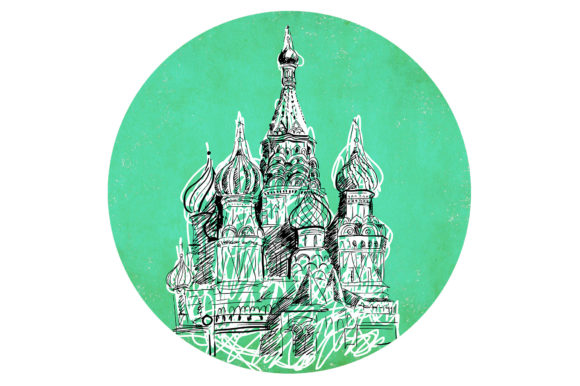
St. Basil's Cathedral: A Russian Landmark
Moscow’s skyline is defined by the riot of colour and shape that is St. Basil’s Cathedral. For many, it is the definitive image of Russia: onion domes striped like candy canes, patterns that seem both ancient and playful, and a history that intertwines faith, power, and legend. This is not a single building but a cluster of nine chapels, each with its own altar and character, built between 1555 and 1561 under Ivan the Terrible. The central church rises like a tent, surrounded by smaller towers that dance around it. The effect is something between a fortress, a fairytale, and a prayer.
Understanding St. Basil’s matters differently depending on who you are. A photographer sees geometry and light. A history buff sees Ivan’s ambition and the conquest of Kazan. An entrepreneur might see a brand icon. Each audience brings its own lens, and what makes the cathedral remarkable is that it rewards all of them. This article unpacks what St. Basil’s Cathedral is, why it still matters, and how different people can evaluate it based on their own priorities—whether that is creative inspiration, learning value, travel planning, or commercial use.
What St. Basil’s Cathedral really is
Officially called the Cathedral of the Intercession of the Most Holy Theotokos on the Moat, the building is part of the Moscow Kremlin and Red Square UNESCO World Heritage site. It was commissioned by Ivan IV to commemorate the capture of Kazan and Astrakhan. Legend claims Ivan blinded the architects so they could never create anything more beautiful—a story that is almost certainly false, but which captures the awe the building still inspires.
From an architectural standpoint, it combines Russian wooden church traditions with Byzantine and Italian influences. Each of its nine domes is unique in pattern and colour. The interior is a maze of narrow corridors, low doorways, and tiny chapels, each dedicated to a saint whose feast day coincided with a key battle. The overall floor plan is a star, and the central nave rises to 46 metres. The effect is intimate rather than grand—you are inside a jewel box, not a hall.
For anyone trying to understand Russia, St. Basil’s works as a compressed symbol: the fusion of faith and state, the love of ornament, the tension between isolation and display. It is not a static monument. It has survived fires, Napoleonic occupation, Soviet anti-religion campaigns, and the pressures of modern tourism. Each layer of survival adds meaning.
Why travellers and photographers prioritise different things
For someone planning a visit, practical concerns dominate: opening hours, queue times, ticket prices, and whether photography is allowed inside. St. Basil’s interior is dimly lit, with narrow spaces that make tripods impractical. The best light for exterior shots is early morning or late afternoon, when the domes catch the sun against a dark blue sky. Beginners in photography might focus on replicating the classic wide-angle shot from Red Square; experienced photographers will look for details—the patterns on a single dome, the contrast between the cathedral and the Kremlin wall, the way rain slickens the cobblestones and doubles the colours.
Cost and time matter differently. A budget traveller might skip the interior ticket (around 1,000 rubles) and spend time walking around the outside, which is free and offers nearly as much visual reward. A professional travel blogger will need both interior and exterior shots, and will plan for the crowds that peak between 11 a.m. and 3 p.m. For someone who values authenticity over polish, visiting in winter—when the square is quieter and the domes are snow-capped—creates a more intimate experience, even if the cold limits how long you can stay outside.
Reliability matters here: opening hours change seasonally, and the cathedral closes on some religious holidays. Always check the official museum website before going. The building is also under renovation at times, with scaffolding covering part of the facade. That can disappoint someone looking for a perfect postcard image, but for a creator documenting preservation in progress, it adds a layer of story.
Creators, educators, and the search for inspiration
Artists, designers, and illustrators find St. Basil’s a visual library. The domes are not just colourful—they use repeating geometric patterns, zigzags, scales, and spirals that translate well into graphic design, textile patterns, or branding elements. A beginner illustrator might trace the silhouette as an exercise in symmetry. A professional graphic designer could extract the colour palette—deep reds, greens, golds, blues—and use it for a poster or packaging project. The patterns themselves are flexible: they work in both digital and physical media.
Educators face a different question: how to make a medieval building relevant to a modern classroom. The cathedral works as a case study in patronage (Ivan the Terrible’s propaganda tool), in iconography (how religious and political symbols merge), and in preservation (how a sacred site becomes a museum under the Soviet regime). A history teacher can use it to discuss the Mongol legacy, the rise of Moscow, or the role of the Orthodox Church. An art teacher can focus on colour theory, proportion, and the fact that the cathedral contains no straight lines—everything curves. A business instructor could even use the cathedral as a metaphor for brand consistency: the domes are different yet recognisable as a single entity.
For hobbyists—whether they paint, write, or build models—St. Basil’s offers a project with clear constraints and infinite variation. Building a scale model of the cathedral in cardboard or Minecraft teaches spatial reasoning. Writing a short story set inside its corridors forces attention to mood and sensory detail. The building rewards patience: the more closely you look, the more you notice asymmetries and surprises.
Entrepreneurs, marketers, and commercial value
For a small business owner or marketer, St. Basil’s Cathedral is a powerful visual asset. It suggests heritage, craftsmanship, and cultural depth—qualities that can elevate a brand. A company selling luxury travel, premium home decor, or heritage-inspired products might use the cathedral’s image or motifs in packaging, advertising, or web design. The key is to avoid cliché. Using a generic photo of the cathedral tells a tired story. Using a detail—the texture of a single dome, the pattern on a gate—shows sophistication and invites curiosity.
Cost and quality play differently here. A marketer on a tight budget can use public-domain images or free icon sets that reference the cathedral’s silhouette. Someone investing in a premium campaign might commission an original illustration or a custom colour palette derived from the cathedral’s tiles. The long-term usefulness of such an asset depends on how well it connects to the brand’s core message. If you sell minimalist furniture, a flamboyant Russian cathedral motif will clash. If you sell spices or textiles, it might feel natural.
Flexibility is another dimension. The cathedral’s iconography works across media: video introductions, social media avatars, event backdrops, even fabric design. A creator on Etsy could sell digital wallpapers or embroidery patterns based on the domes. A freelance content writer could produce blog posts or travel guides that feature the cathedral as a central example of cultural storytelling. For entrepreneurs, the commercial value is not in the building itself but in how well its associations match the audience they serve.
Evaluating whether St. Basil’s fits your needs
Not everyone needs to visit or use St. Basil’s Cathedral. A family on a short Moscow trip might find the queue too long for young children and the interior too cramped. A digital artist focused on surrealism may find the cathedral too literal. A business owner selling tech products may struggle to connect the building’s medieval symbolism to a modern brand.
The way to decide is to ask yourself what you value. If you prioritise ease of access, the cathedral is centrally located but not always easy to enter—plan around peak hours and closures. If you value creative stimulation, the building offers endless detail but requires you to look slowly. If you care about commercial potential, the cathedral delivers strong recognition but demands thoughtful adaptation to avoid cliché. For learning value, it is extraordinary: one building holds architectural, political, religious, and artistic history in a compact space. For long-term usefulness, the cathedral will not go anywhere—it remains a constant reference point in Russian culture and global iconography.
Beginners often feel intimidated by the density of the cathedral. They should start with the outside, read a short history, and focus on one detail that catches their eye. Experienced users—whether photographers, historians, or designers—can dive deeper into specific periods, construction techniques, or preservation debates. The cathedral accommodates both. It does not demand expertise; it rewards curiosity.
St. Basil’s Cathedral is many things to many people. For some, it is a bucket-list destination. For others, it is a source of colour and pattern. For a few, it is a case study in power and faith. The building itself does not change. But the way you look at it changes everything. Whether you plan a visit, create from a photograph, or reference it in your work, the cathedral offers something solid and something surprising. The challenge is not to see it once, but to see it freshly—through your own lens, whatever that may be.