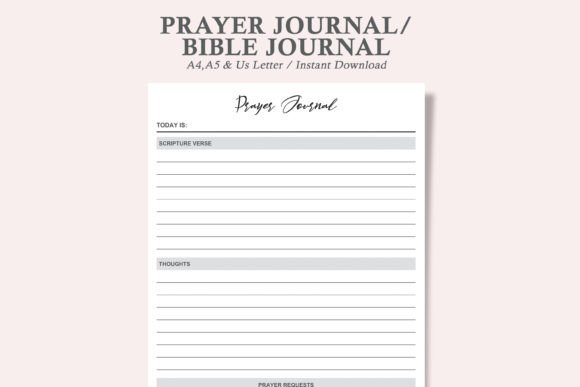
The Complete Guide to Prayer Journaling and Bible Journaling: Deepen Your Faith Through Written Reflection
In an age of constant noise, notifications, and digital distractions, many believers are rediscovering the ancient practice of writing as a form of spiritual discipline. Prayer journaling and Bible journaling are two complementary practices that help you slow down, reflect deeply, and connect with God in a more intentional way. While they are often grouped together, each serves a distinct purpose—and when combined, they create a powerful rhythm for personal faith growth.
Whether you are a beginner wondering where to start or someone who has journaled for years and wants to go deeper, this guide will walk you through everything you need to know. We will explore what these practices are, why they matter, how they fit into modern life, and how you can begin today with confidence and creativity.
What Is a Prayer Journal?
A prayer journal is a dedicated space where you write out your conversations with God. It is not a diary in the traditional sense, though it often includes personal thoughts and emotions. Instead, it is a place to record prayers, list requests, note answers, and express gratitude. The act of writing slows down your thinking, helping you focus on what you truly want to say and hear.
The Purpose Behind the Practice
Prayer journaling serves several important functions. First, it brings clarity. When you write out a prayer, you are forced to articulate your thoughts instead of letting them swirl vaguely in your mind. This often reveals what is really on your heart—worries you did not realize were there, hopes you had not named, or gratitude you had overlooked.
Second, it builds a record of faithfulness. Over time, your journal becomes a tangible testimony of how God has moved in your life. You can look back at prayers from months or years ago and see how they were answered, sometimes in ways you did not expect. This strengthens your faith and reminds you of God's consistency.
Third, it encourages consistency. A dedicated journal invites you to return regularly, creating a habit that deepens your prayer life.
How to Start a Prayer Journal
Starting a prayer journal does not require any special skills or materials. A simple notebook and pen are enough. Here are a few approaches you can try:
- The ACTS Method: Write under four headings: Adoration (praising God), Confession (naming sins), Thanksgiving (expressing gratitude), and Supplication (making requests). This structure keeps your prayers balanced.
- Letter Style: Write your prayer as a letter to God, beginning with "Dear Father" and writing whatever comes to mind. This feels personal and conversational.
- List Format: Some people prefer simple lists—requests on one side, answered prayers on the other. This is especially helpful if you are short on time or prefer a more structured approach.
- Prompt-Based: Use guided prompts such as "What am I grateful for today?" or "Where did I see God at work this week?" to get started when you feel stuck.
The key is to find a method that feels natural and sustainable. There is no "right" way to pray on paper.
What Is a Bible Journal?
A Bible journal is a space where you engage with Scripture through writing, drawing, or note-taking. It goes beyond simply reading the Bible; it involves interacting with the text, asking questions, recording insights, and applying what you learn to your life. While some people write directly in their Bible margins, many use a separate notebook or a journaling Bible with wide margins.
The Purpose of Bible Journaling
Bible journaling helps you move from reading Scripture to studying it. When you write down what a passage means, you process it more deeply. You begin to notice details you might otherwise skim over—repeated words, cultural references, connections between Old and New Testament passages, or personal applications that speak directly to your circumstances.
It also creates a personal commentary on the Bible. Your journal becomes a record of what God has taught you through specific passages. Years later, you can return to the same verse and see how your understanding has grown.
Methods of Bible Journaling
There are many ways to approach Bible journaling, and you can mix and match based on your learning style:
- The SOAP Method: This popular approach stands for Scripture (write the verse), Observation (note what the text says), Application (how it applies to your life), and Prayer (respond in prayer). It is simple and effective for beginners.
- Verse Mapping: Choose one verse and study it in depth. Look up the original Greek or Hebrew words, explore cross-references, research the cultural context, and paraphrase the verse in your own words. This method is excellent for those who love digging deeper.
- Artistic Journaling: If you are visually inclined, you can illustrate passages with drawings, hand-lettering, or watercolor. The creative process helps you meditate on the text in a different way.
- Question-Based: Write down questions you have about a passage. What does this reveal about God? What does it reveal about humanity? What is the main command or promise? Then research or pray through the answers.
Each method serves the same goal: helping you engage actively with Scripture rather than passively consuming it.
Why Combine Prayer Journaling and Bible Journaling?
While you can practice either one alone, combining them creates a richer spiritual rhythm. The two practices feed each other naturally. When you journal through a Bible passage, insights often lead to prayer. When you write out prayers, you frequently recall Scriptures that speak to your situation. Together, they create a cycle of listening and responding.
Consider this example: You read Psalm 23 and journal about what it means to have the Lord as your Shepherd. This leads you to pray about a specific area where you feel anxious or directionless. You write out a prayer asking for guidance, trusting that the Shepherd will lead you. Later, when you look back on that entry, you can see how God provided direction in that season.
This integration helps you move beyond a fragmented faith where Bible study and prayer feel like separate activities. Instead, they become two parts of one ongoing conversation with God.
Common Misunderstandings and Assumptions
Many people hesitate to start a prayer journal or Bible journal because of common misconceptions. Let us address a few:
- "I have to write every day." No. Consistency is helpful, but the goal is not perfection. Even writing once a week can be meaningful. What matters is the quality of your engagement, not the frequency.
- "I need to be a good writer or artist." Not at all. Your journal is for you and God. It does not need to be eloquent or beautiful. Simple, honest words are more valuable than polished prose.
- "I might do it wrong." There is no wrong way to journal your faith. The only mistake is letting fear keep you from starting. Your journal is a safe space for exploration and growth.
- "It takes too much time." You can spend as little as five minutes writing a single prayer or reflecting on one verse. The practice scales to your schedule.
Releasing these assumptions frees you to approach journaling with curiosity rather than pressure.
Modern Relevance: Journaling in a Digital Age
In a world dominated by screens, the tactile act of writing by hand has become a form of resistance against distraction. Research suggests that handwriting improves memory retention and processing compared to typing. For spiritual purposes, writing slows you down enough to hear your own thoughts—and perhaps the still, small voice of God.
That said, digital tools also have a place. Some people use tablet apps with styluses to combine handwriting and digital organization. Others type their journal entries and tag them by topic for easy searching. There are even apps designed specifically for prayer journaling, with prompts and reminders. The medium matters less than the intention. What works for you is what is best.
Many churches and small groups have also embraced journaling as a shared practice. Group members may journal through the same book of the Bible and then discuss their insights, or they may keep prayer journals and share testimonies of answered prayers. This communal dimension adds accountability and encouragement.
Practical Tips for Long-Term Success
If you want to make prayer journaling and Bible journaling a lasting part of your life, consider these strategies:
- Set a manageable goal. Instead of "I will journal every day," try "I will journal three times this week." Success builds momentum.
- Keep your materials accessible. Store your journal and pen where you usually read or pray. Remove barriers to starting.
- Use a prompt when you feel stuck. A simple question like "What is one thing I learned about God today?" can get you going.
- Review past entries regularly. Set aside time monthly or quarterly to read through old journal entries. This reveals growth and reminds you of God's faithfulness.
- Be honest. Your journal is a place for raw emotion. If you are angry, confused, or doubting, write that. God can handle your honesty, and writing it out often leads to clarity.
Building a Broader Understanding
Prayer journaling and Bible journaling are not ends in themselves. They are tools that serve a larger purpose: cultivating a deeper, more intimate relationship with God. The goal is not to fill pages but to know God more fully and follow Him more faithfully.
These practices also connect to the broader Christian tradition of spiritual writing. Christians throughout history have kept journals of their spiritual journeys—from Augustine's Confessions to the diary of Corrie ten Boom. You are joining a long line of believers who have used pen and paper to process their faith, wrestle with doubts, and celebrate God's work in their lives.
Whether you write in a leather-bound notebook, a spiral binder, or a digital document, the act of putting your faith into words has the power to transform your spiritual life. It clarifies your thinking, deepens your engagement with Scripture, and creates a lasting record of God's faithfulness.
Conclusion: Your First Step
If you have never tried prayer journaling or Bible journaling, now is the perfect time to begin. You do not need a special journal or artistic talent. You just need a willingness to show up and write. Start with five minutes. Write one prayer. Reflect on one verse. See where it leads.
These practices are not about performance or productivity. They are about presence—being present with God, with Scripture, and with your own heart. As you write, you may discover that the page becomes a sacred space where your faith takes shape, your questions find room, and your relationship with God grows richer than you imagined.
Open your journal. Pick up your pen. Begin.